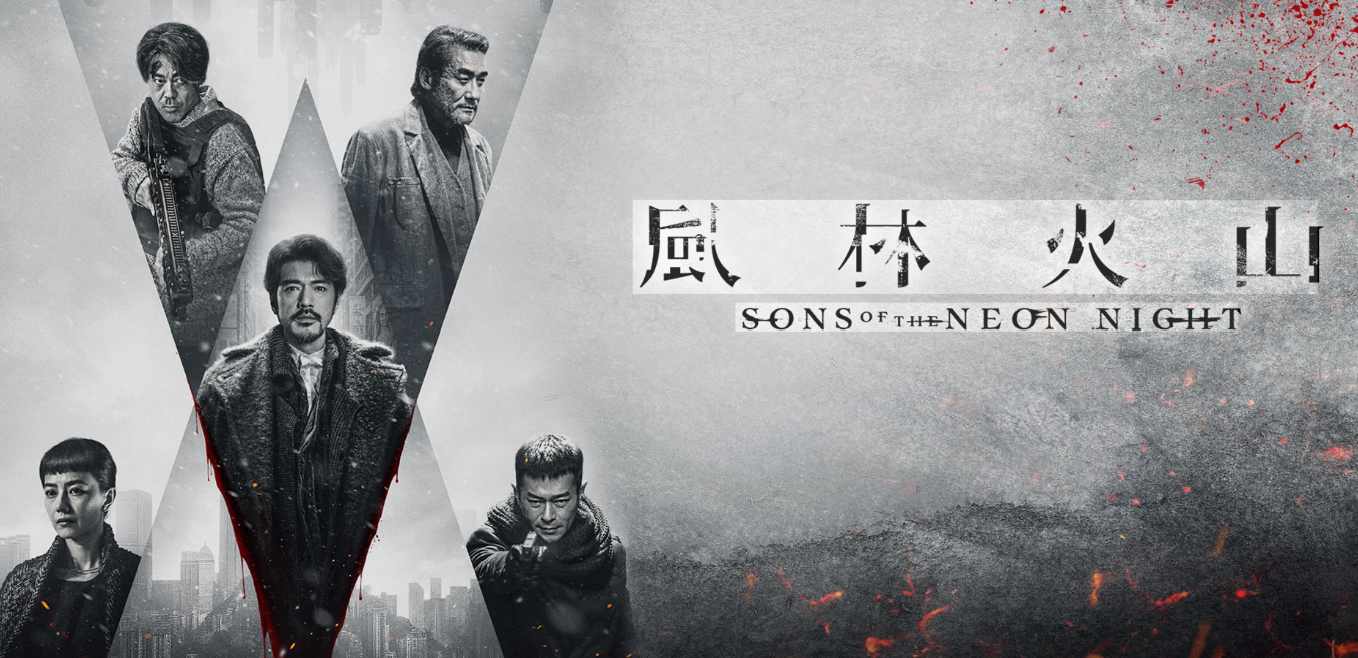
Sons of the Neon Night is one of the unfortunate incidents in the Hong Kong film industry. Filming started in 2017 and finished in 2018, but continued delays in releasing, partly caused by the COVID pandemic, had turned it into a white elephant. By the time it was released in 2025, it was just a film cobwebbed with rumours, scandals and whatever and however people wanted to talk about it.
But was it not good?
I finally got a chance to watch it on a flight from Sydney to Singapore. Being a huge Takeshi Kaneshiro fan, I was looking forward to seeing what he could deliver after years of being away from the spotlight. As the son who was determined to wipe out the dark history of his father’s company and start clean, he carried huge weighs on his shoulders. But is there really a way to wipe clean without getting your hands dirty? This is one of the major questions asked by the movie.
The movie’s setting is a post nuclear winter Hong Kong. To be honest with you, apart from giving Hong Kong a post-apocalyptic feel and an excuse to stylise the tone of the movie, this backdrop didn’t really do much to move the story forward. But that’s a director’s choice, I guess.
Without a question, the writer and director Juno Mak wanted to create a specific tone or mood for the movie. Apart from the stylised camera angles and movement that tried to match with this black and whitish tone, a lot of the dialogues delivered by the characters in the story many a times sounded like monologues in a Shakespearean play. This definitely gives the movie an edge over regular storytelling, but I couldn’t help but wondered – would the general audience embrace that? The reality is despite he had a cast of who’s who in the Hong Kong film industry including Takeshi Kaneshiro, Sean Lau, Tony Leung Ka-Fai, Louis Koo, Michelle Wai etc. etc. who could deliver extremely outstanding performances to the dot, at the end of the day, you still need an audience to understand it.
Don’t get me wrong, the story was really straightforward in my opinion. And it is a story that anyone who had watched enough “good cops, bad cops, good villains, bad villains movies” can figure out in a heartbeat. So how much this sophisticated packaging could add value to the story and hence the movie, is the main question. I personally don’t mind as much but I had a strong feeling that for the general audience a more straightforward presentation with a different director’s cut could be a better option for this film for its general release.
I don’t hate this movie, but I couldn’t get myself to love it either. The good thing about the movie is that there were lingering feelings inside me about it long after finishing it and I am determined to write those feelings out a month after seeing it on the first flight of my month-long overseas trip. But then are those feelings enough to help get people into the cinema and steer the Hong Kong movie industry out of this, well, ironically nuclear winter that it is going through right now?
Maybe I am being too pragmatic about this. After all, film is a medium of artistic expression, so I should not be too focused on bums on seats. However, being a person who grew up watching Hong Kong movies and because of all the great movies and performance aspired to study theatre and become an actor, I personally feel for the tough phase the industry is going through at the moment. I don’t have any issues with the movie. The performances were a joy to watch and one master class of acting after another, but at the end of the day, if it failed to recoup the budget despite this great cast, where can the industry go?
Artistic expression should always be valued, but for me, you still need a pile of gold to sit on first when it comes to the entertainment industry. That’s the reality.